
El Cerrito Address History Sources
One address can have several histories. A deed chain follows land interests. A city directory follows listed households. A census records a household on an enumeration date. A Sanborn map dates buildings and street context. Newspapers and probate can explain an arrival, departure, death, or transfer. The table keeps those trails from being treated as one interchangeable list of previous residents.
| Source | Years it covers | Where held | What it shows |
|---|---|---|---|
| RecorderWorks | Name index 1986+; deed APN 1997+; Old Book earlier | Contra Costa Clerk-Recorder | Parties, instruments, dates, document or book/page |
| Archived parcel books | Superseded parcel references; exact run varies | Public Works Laserfiche and counter | APN ancestry, map and legal-description bridges |
| Regional city directories | Named years 1903-1939, non-continuous | Richmond Library, California Revealed, Internet Archive | Listed names, addresses, household and occupation clues |
| El Cerrito Journal and related titles | 1917-1979; 1984-1988; later NewsBank | Contra Costa County Library | Obituaries, notices, social and property context |
| Sanborn atlas | July 1926, 15 sheets | Library of Congress | Building footprint, use, materials, street context |
| Census schedules | Through 1950 public | NARA and library databases | Household snapshot on the enumeration date |
The source years are not a promise of continuous coverage. They are the points from which a house-history search can be planned.
Start With Today’s El Cerrito APN
Search the address in the Contra Costa CCMAP viewer and select the parcel that matches the situs. Record the APN, jurisdiction, parcel geometry, and any nearby shapes. An APN is the county’s ten-digit parcel key in 123-456-789-0 form. It gives the backward trail a stable starting point even when a street name or house number changes.
Use the Assessor or tax system to check parcel evidence, but keep owner-of-record, tax mailing address, and occupant as separate fields. A mailing address can point outside the parcel. An owner can sell without living at the property. The first step for previous residents is therefore a parcel identity check, not a name claim.
- APN
- Assessor parcel number used to connect map, tax, assessment, and land-record systems.
- Chain of title
- The sequence of recorded transfers that links one land interest to the next.
- Legal description
- Lot, block, tract, or other land wording used to confirm that two instruments concern the same property.
Find the El Cerrito Acquisition Deed
RecorderWorks searches a person or instrument rather than starting with a street. Use current owner evidence to search the name as a grantee and narrow the date and document type. Open the result and record grantor, grantee, recording date, document number, legal description, and any APN or book/page reference. A grantor transfers an interest; a grantee receives it.
Then pivot. Search the prior grantor in an earlier period and compare the legal description or APN ancestry. The chain becomes reliable when the parcel reference agrees at each step. A party-name match without the same land description is only a candidate. RecorderWorks’ modern name index begins January 1, 1986, and deed APN mode begins March 3, 1997. Old Book mode and the Clerk-Recorder counter are needed for earlier indexed books.
- Identify the current parcel and APN in CCMAP.
- Find the acquisition instrument and save the parties, date, document number, and legal description.
- Search the grantor as an earlier owner, using the prior date range and exact instrument type.
- Check map books, parcel ancestry, and any split or merger before assuming that an old APN is the same parcel.
- Stop when the record becomes uncertain and ask the custodian for the next index or book reference.
El Cerrito Archived Parcel Books
Superseded APNs are a common reason an older deed seems to vanish. Contra Costa Public Works keeps recorded maps, surveys, corner records, annotated parcel books, and archived parcel books through a Laserfiche workflow. Read the current APN’s book and page, consult the annotated book, and retrieve the referenced LSM or corner-record map. The Public Works Records counter is at 255 Glacier Drive in Martinez.
These books can bridge a split or merger that a modern tax lookup does not explain. Keep the archive title, map or book/page, APN reference, and retrieval date. A map shows land geometry and legal description, not who occupied the house. Use a directory, census, newspaper, or probate record for the human layer.
The Contra Costa History Center is another offline fallback for older assessor books, maps, deeds, probate, and naturalization material.
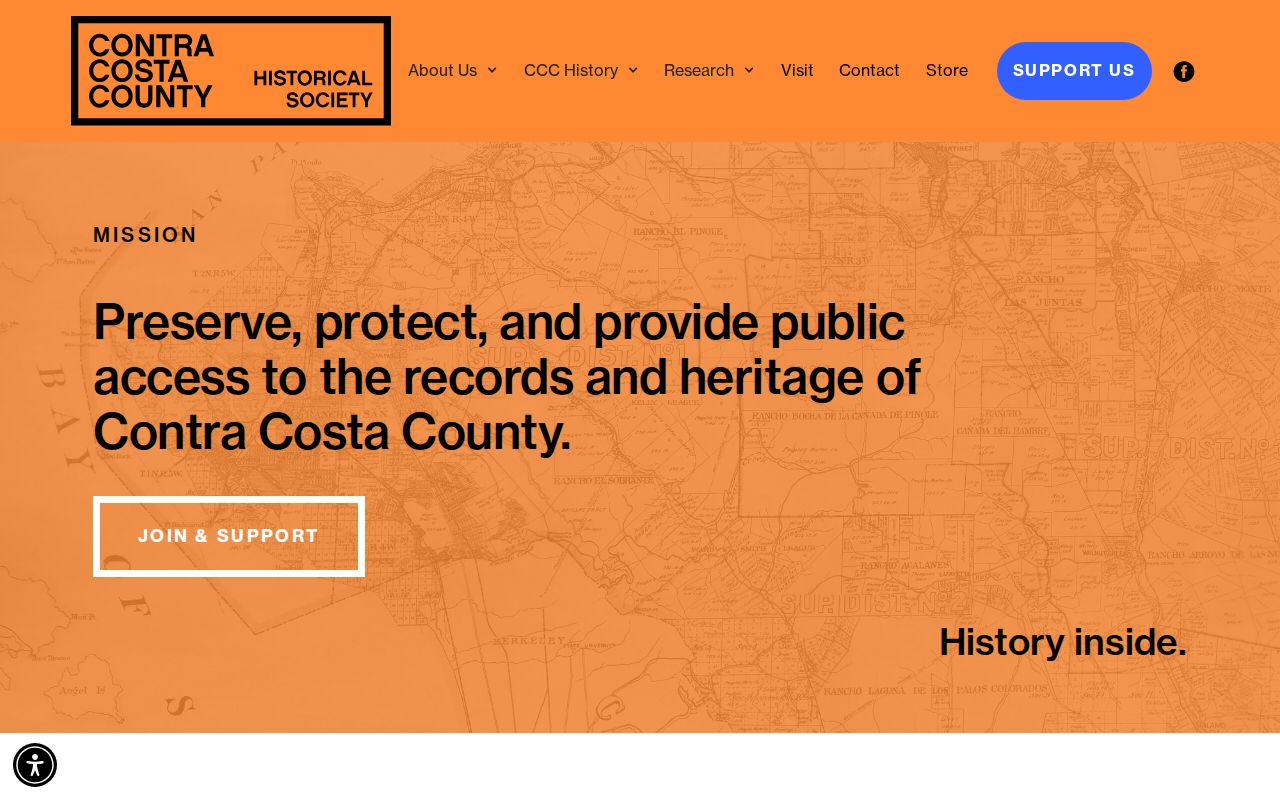
Its collection scale makes a precise surname, place, record type, and date question more useful than a broad request for every record about an address.
El Cerrito Owners and Occupants
Ownership does not prove occupancy. Pair a deed owner with a city directory entry, census household, newspaper notice, or reverse-directory result for the same year. Renters and other household members can disappear from property sources, while a directory entry may list only a householder or subscriber. A tax mailing address may be outside El Cerrito and still be valid for tax notice delivery.
The History Center’s research resources include public web indexes and office-only indexes or terminals. Ask what a result actually represents before treating it as a previous resident. If a directory lists a subscriber, say subscriber. If a deed names a grantee, say grantee. That language preserves the distinction between land history and household history.
The History Center database guide helps identify which questions can be answered online and which require an office visit.
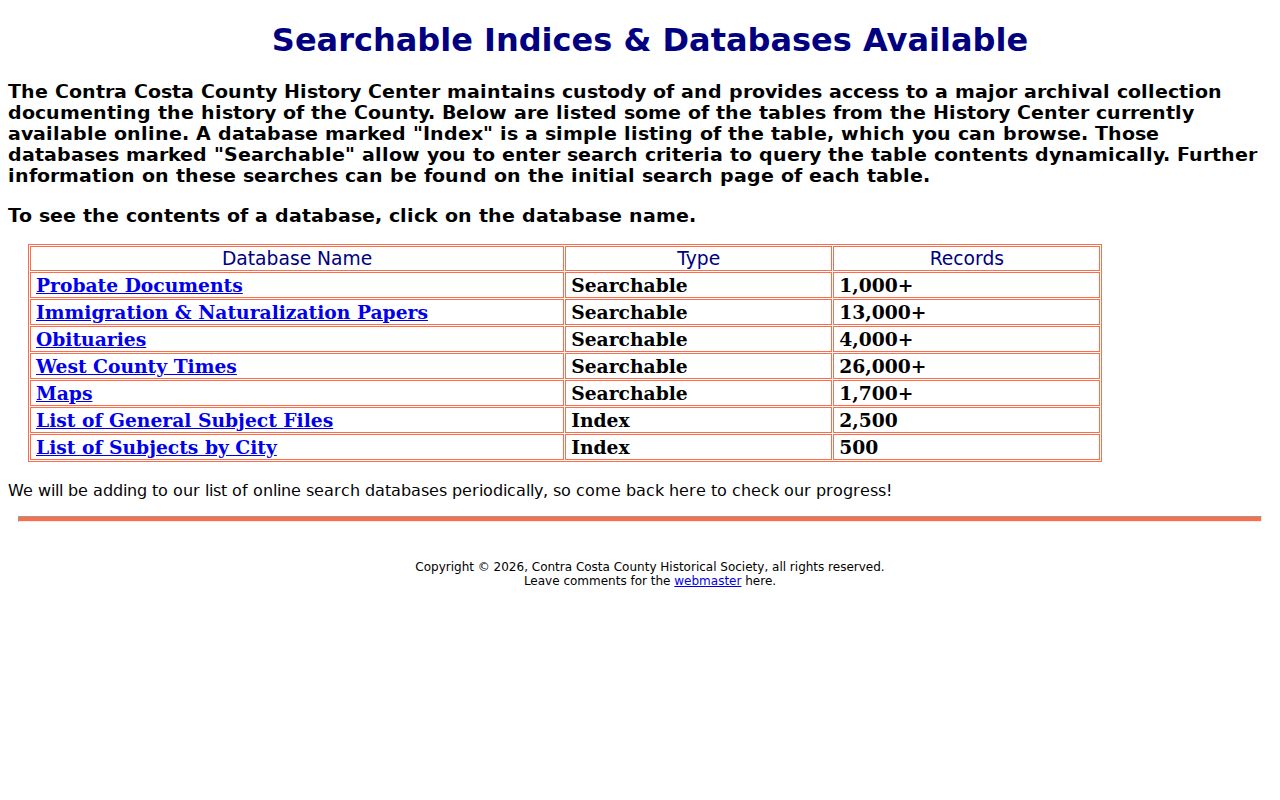
Use the guide to choose the right source before asking the record to show more than its fields support.
El Cerrito Directories and Census Pairing
The El Cerrito city directory collection is non-continuous. Verified regional editions include named years from 1903 through 1939, and the 1921 volume explicitly includes El Cerrito. Pair each available edition with the nearest released census schedule. The directory may give a street and a short household line; the census may add ages, relationships, and members present on enumeration day.
Follow one issue at a time. Copy the entry, page, publisher, locality, and abbreviation key. Search the spouse, widow notation, initials, and old place label. Use Times-Journal during the 1979 to 1984 El Cerrito Journal gap, then The Journal after 1988. The library’s NewsBank local edition begins in July 2001, outside most house-history work but useful for later events.
For the complete shelf and entry-reading method, use the El Cerrito city directory collections page. Previous residents are the trail across the years, not a second description of every collection.
El Cerrito Sanborn House History
The July 1926 El Cerrito Sanborn atlas has 15 sheets and also covers portions of Richmond, Richmond Annex, Contra Costa County, and Albany. It can show a building footprint, use, materials, and street-number context. It cannot identify an occupant. Place the map beside a directory or deed to test whether an old structure and address fit the parcel trail.
The atlas is especially useful when a property has a changed number or a border label. Some 1923 to 1930 sheets may not be available online because of rights restrictions, so the Library of Congress catalog entry may be the evidence that the series exists. Keep the sheet number and title with the house-history note.
El Cerrito Permits Add Dates
El Cerrito eTRAKiT property records reach 2006 onward in the verified online workflow. The address search accepts a complete or partial address, then returns a selectable address and parcel number. Modules include permits, planning and zoning, contractors, properties, inspections, licenses, and violations. Registration is needed for applications, payments, and documents; basic search is public.
Building permits can document additions, repairs, conversions, and electrical or plumbing work. The applicant may be an owner, agent, or contractor, so a permit dates a change to the structure rather than proving that a named person lived there. Request earlier files through City Archives when the online run is too recent.
The city’s permit-counter warning is part of careful record work as well as payment safety: official processors are named, and wire, Zelle, Venmo, and PayPal demands are rejected.
El Cerrito’s Chung Mei Resident Story
The El Cerrito Historical Society’s Chung Mei Chronicle is an unusual institutional resident source. Fifteen listed volumes run from October 1928 through April 1943, mostly monthly newsletters written by boys. Chung Mei moved from Berkeley to El Cerrito in 1935. Newsletters, Shadi Room blueprints, photographs, and related documents can add names and personal context that a deed or directory will not show.
It is still a secondary trail. Tie a name or date to a directory, newspaper, deed, census, or archival item before treating it as a complete address history. Institutional records can show a person’s connection to a place without proving a private residence.
The Chung Mei Chronicle collection gives a glimpse of how local history can preserve previous residents in a form unlike a conventional directory.
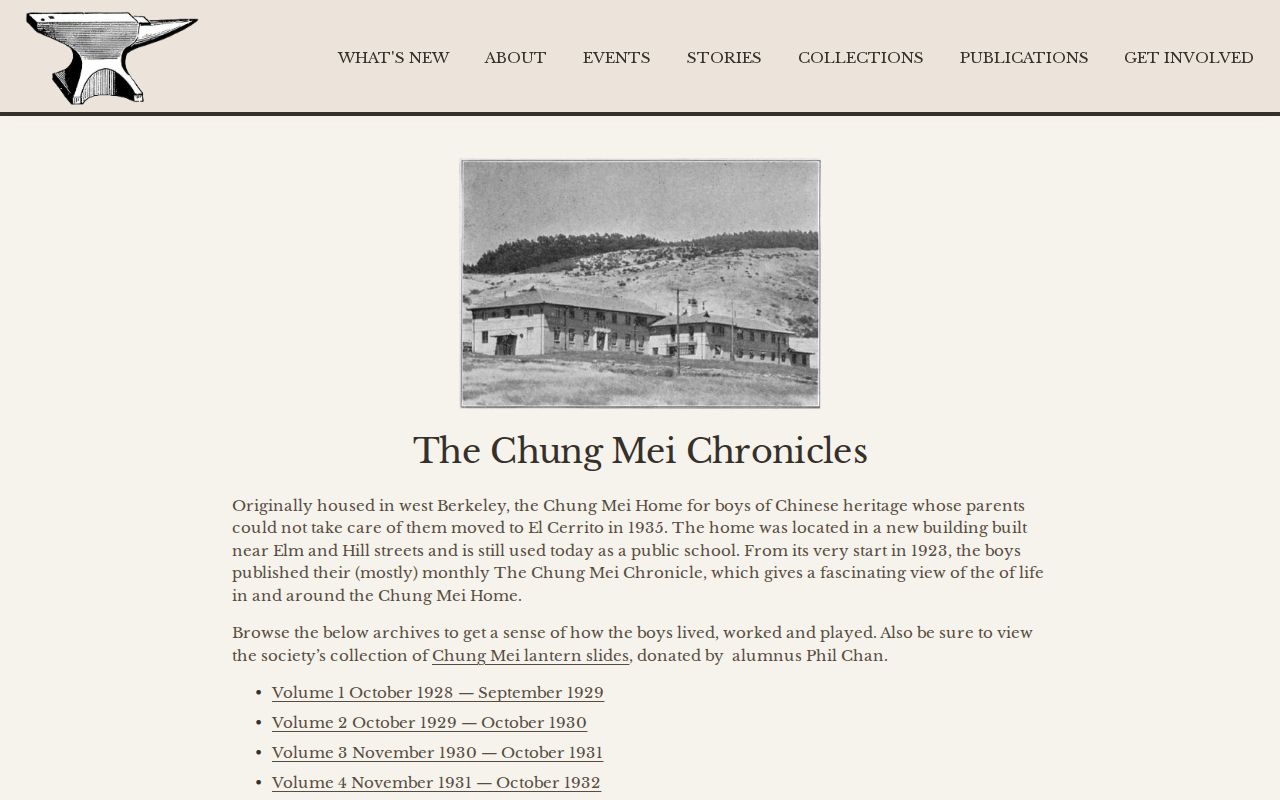
Use the institutional story as a lead into the dated archive, not as a substitute for the custodian record.
El Cerrito Shadi Room Research
The Dorothy and Sundar Shadi Historical Room is on the second floor of El Cerrito City Hall. Its holdings include manuscripts, books, ephemera, photographs, maps, sound and moving images, and special material on Chung Mei Home and the Castro or Rancho San Pablo family. There is no comprehensive catalog yet, and preservation and digitization are still underway.
Published hours conflict between city and society pages, so arrange an appointment instead of choosing one schedule. Ask for a precise surname, address, date span, and material type. The room may supply a finding aid, image, or map that can then be checked against a deed or city directory.
The reference policy explains the access limits and the need to coordinate a visit.
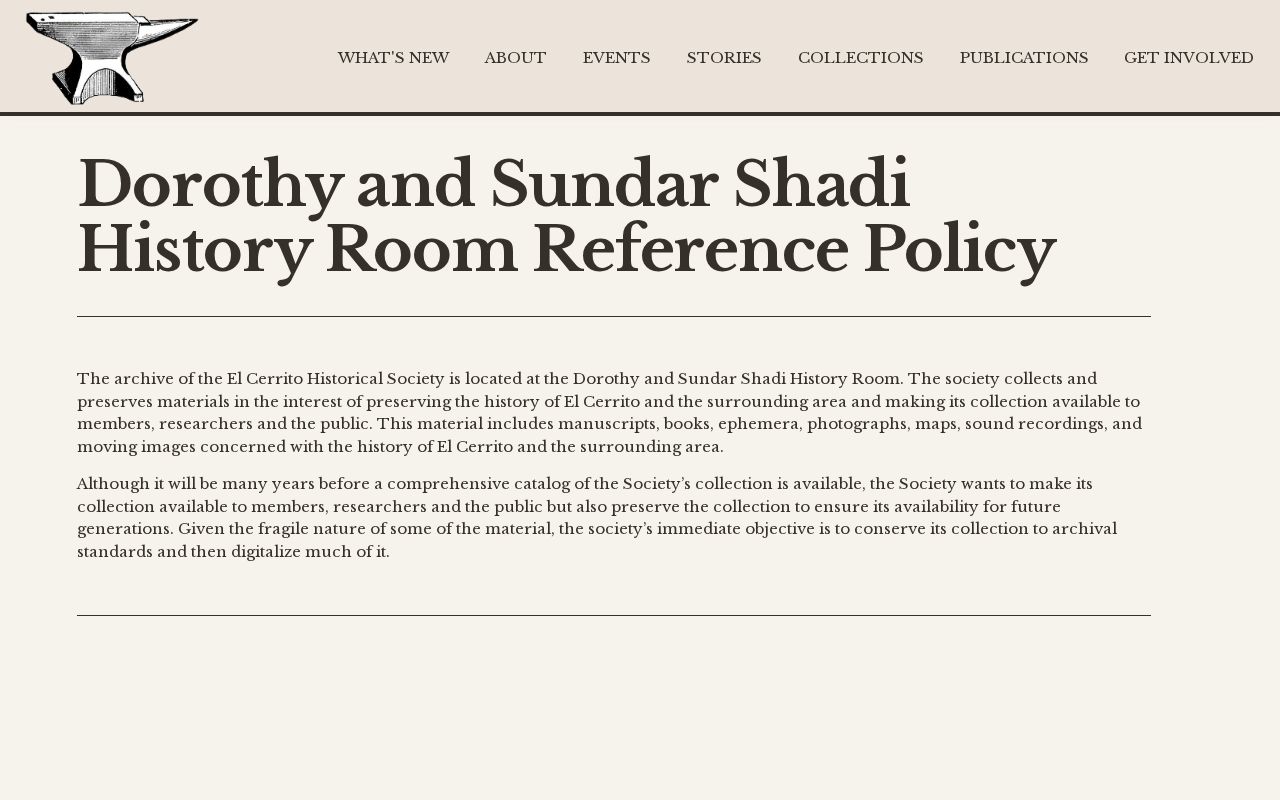
Appointment research at the Shadi Historical Room is a useful fallback when a house-history question reaches beyond a public web index.
El Cerrito Address and Build-Date Trail
The Historical Society compiled a street-address and build-date list for many residences and some commercial buildings from recorder and city-building evidence. Treat the compilation as a finding aid. Verify the underlying deed, permit, map, or archive record, especially when a parcel was split or a building was altered.
The combination of an old address list, the 1926 Sanborn atlas, and city permit files can show how a structure changed over time. None of those sources alone establishes every prior resident. A house can retain its footprint while occupants change, or a permit can name a contractor who never lived there.
The historic address and building archive makes the bridge visible between land records and local history.
Use it to choose the next record, then return to a primary custodian for confirmation.
Close an El Cerrito Resident Trail
Obituaries and probate often close a previous-residents trail. An obituary can explain a departure, survivor, or former address. A probate petition can identify an estate role or heir, while a later affidavit or deed can show a property transfer. Search the El Cerrito Journal and its title bridges, then compare the date with RecorderWorks and the court file.
When a trail crosses a border, search Richmond, Stege, Rust, Albany, Berkeley, and older county labels. El Cerrito incorporated in 1917, so earlier records may be filed under a wider geography. The 1894 final decree in Emeric v. Alvarado and Rancho San Pablo title language can also appear in older subdivision and land records.
Lawful house history. Previous residents research is for genealogy, property history, estate work, and personal learning. A past address or public record never authorizes stalking, harassment, unwanted contact, intimidation, or harm.
The best conclusion may be a bounded one: a named owner appears in a deed, a listed household appears in a directory, and the link between them remains unconfirmed. That is an honest house history.