
El Cerrito’s City Directory Shelf
The strongest verified El Cerrito city directory shelf is a set of regional volumes rather than a continuous annual run. The collection includes named years from 1903 through 1939, with gaps. The 1921 title expressly includes Richmond, Pullman, Stege, San Pablo, and El Cerrito. A coverage table keeps the known editions separate from holdings that still need a library check.
| Collection | Years | Where held | Access |
|---|---|---|---|
| Regional city directories including El Cerrito | 1903, 1907-1918, 1920-1930, 1932, 1934, 1937, 1939 | Richmond Public Library and California Revealed | Free scans and metadata |
| Western Directory Company volume | 1921 | Internet Archive and California Revealed | Free scan/OCR; inspect printed page |
| El Cerrito Journal and related titles | 1917-1979; 1984-1988 | Contra Costa County Library | Microfilm, digital holdings, and catalog access vary |
| Richmond telephone directories | 1946-1962 sequence | Library of Congress | Check each item for El Cerrito coverage |
| Reverse or criss-cross directories | Exact local years unverified | Library or History Center | Ask before relying on an address run |
Publisher changes matter. City of Richmond issued some early volumes, Contra Costa County appears in 1908, R.L. Polk or Polk Directories covers much of 1910/11 through 1918 and 1923/24 through 1939, and Western Directory Company published the 1920 and 1921 editions. Missing years are real gaps, not permission to imply annual coverage.
El Cerrito Journal Years and Title Changes
The El Cerrito Journal is one of the most useful companion sources for an edition search. The verified newspaper history runs from 1917 to 1979, then 1984 to 1988. During the break, search Times-Journal from Richmond for 1979 to 1984. After 1988, look for The Journal. NewsBank supplies an El Cerrito Journal local edition from July 2001 onward at community libraries.
Digitized holdings include January 1922 through December 1923, and the California Digital Newspaper Collection or Digital Reel adds selected county newspaper scans. Obituaries, social notices, school lists, club minutes, property advertisements, and legal notices can explain why a name appears in one volume and disappears in the next. Search the title that existed in the relevant year, not only the modern city name.
The library’s historical-newspaper resource shows the title continuity and the exact local holdings worth checking.
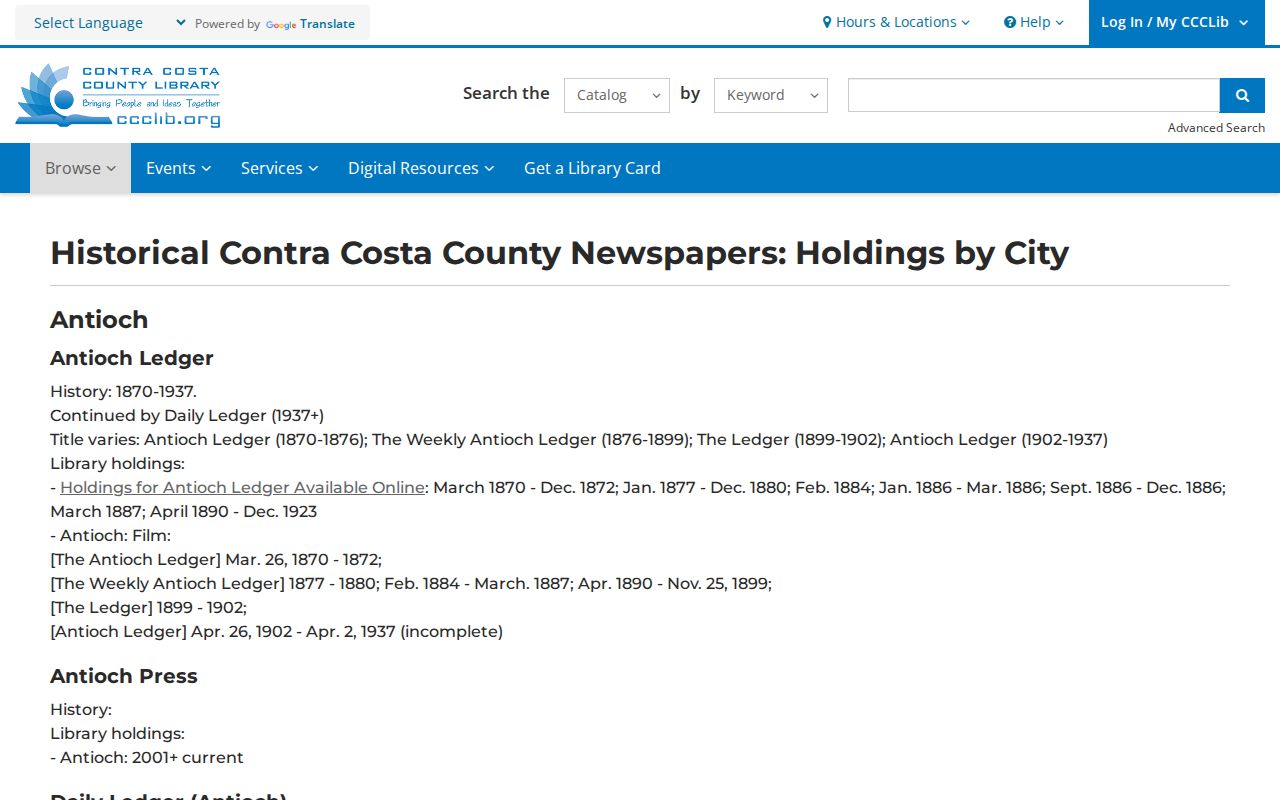
That title map is a practical index to the years between printed editions.
Where El Cerrito Directories Are Digitized
The Contra Costa County Library’s research resource page points readers toward licensed genealogy databases, historical newspapers, and digitized material. California Revealed and the Richmond Public Library institutional shelf provide the most precise city-directory metadata for the named years. Internet Archive holds the scan of the 1921 volume. Use the catalog record to identify the publisher and edition before searching OCR.
Digital access does not erase the need for source handling. OCR can turn initials into names, split a hyphenated surname, or mistake an abbreviation. Capture the title page, printed page number, scan image, and abbreviation key. If a search result looks important, read the adjacent entries and the original page. A clipped snippet is a lead, not a complete entry.
The library’s resource list gives the research starting point for material that may require a library card or an in-branch connection.
Countywide access matters because the El Cerrito branch is small, while databases and interbranch service can reach beyond its local shelves.
The institutional record for the 1921 edition provides a second way to confirm the title, publisher, and regional scope.
Use the catalog record alongside the scan so a search note preserves both the digital item and its institutional description.
Decode an El Cerrito Directory Entry
The 1921 El Cerrito city directory shows how much meaning can sit inside a short line. On printed page 66, “Bowles R C cond St Rys r El Cerrito” contains a surname, initials, an occupation abbreviation, an industry or employer clue, a residence marker, and a locality. Nearby entries show a spouse in parentheses, a widow notation, a house number, a street, and sometimes an RFD box.
| Name | Surname and given initials; spelling should be copied exactly before normalization. |
|---|---|
| Occupation | Abbreviated work or trade label, sometimes followed by an employer or industry. |
| Household clue | Spouse in parentheses or “wid” before a deceased spouse’s name. |
| Address | House number and street when printed; “h” and “r” can distinguish home and residence markers. |
| Locality | El Cerrito, Richmond, Stege, or another place label used by that edition. |
- Criss-cross directory
- A reverse address or street-order section that can move from a location to a listed subscriber.
- Householder index
- An index organized around heads of household or principal residents, not every person in the home.
- Abbreviation key
- The publisher’s legend that defines occupation, residence, spouse, widow, and address marks.
The phrase “resident” in a directory can mean a listed household connection for that publisher and year. It does not guarantee ownership or current occupancy.
The free scan of the 1921 volume makes the entry structure visible before a longer family-history search.
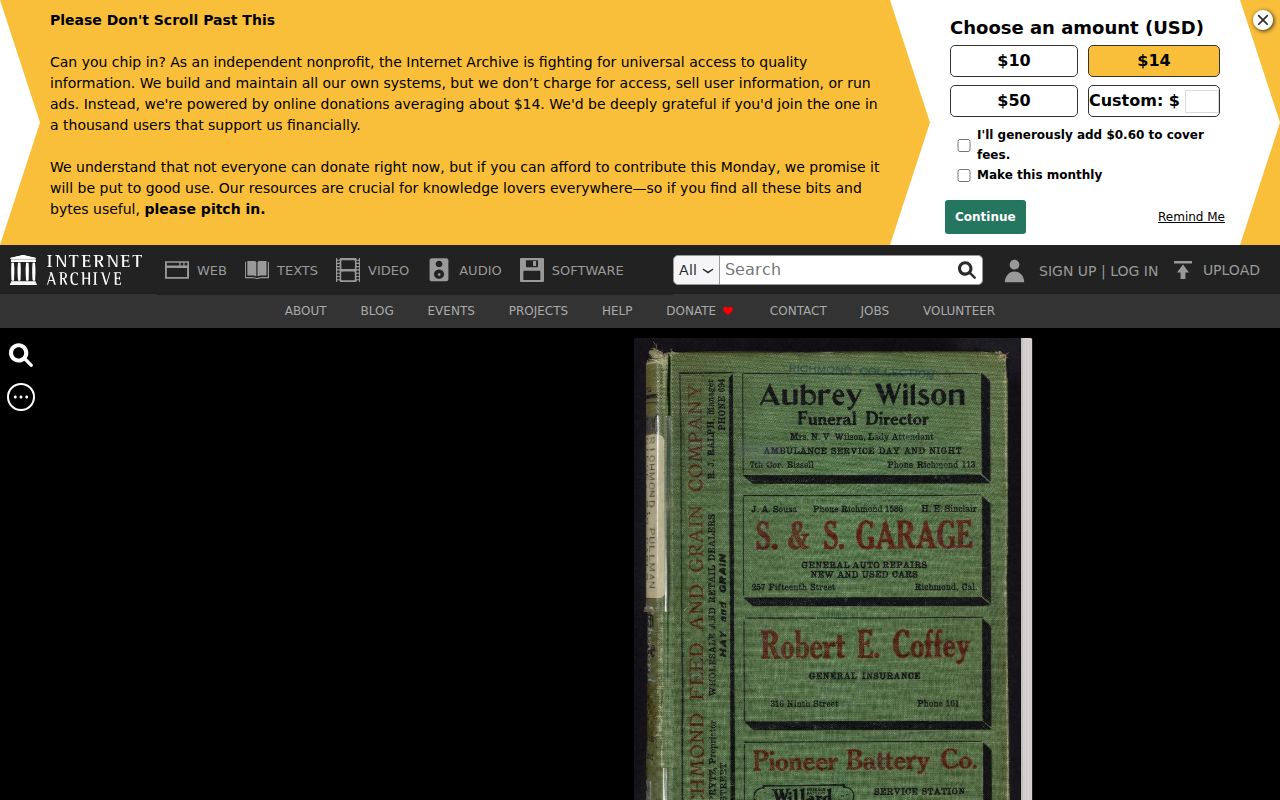
Read the scan and the abbreviation key together. OCR is useful for discovery, but the printed page controls the quotation.
El Cerrito Directory Publishers Over Time
A short timeline helps explain why an edition search changes voice and layout from volume to volume. The early volumes do not all come from the same publisher, and the regional name on a cover can be broader than the city being researched.
- 1903, 1907, and 1909/10 use City of Richmond directory issues in the verified shelf.
- Contra Costa County appears as publisher in 1908.
- R.L. Polk or Polk Directories covers the long 1910/11 to 1918 and 1923/24 to 1939 sequences.
- Western Directory Company publishes the 1920 and 1921 regional volumes.
- Later Richmond telephone books from 1946 through 1962 may continue the search, but each item must be checked for El Cerrito entries.
Publication changes can alter abbreviations, street order, the presence of a householder guide, and whether a street section is available. Treat the publisher and edition as part of the evidence.
Trace El Cerrito Households by Year
Tracing a household through El Cerrito city directories works best one edition at a time. Choose a year with a clear scan, copy the exact entry, and follow the name forward or backward while noting every address and locality label. Then pair the directory with released census schedules, especially 1930, 1940, and 1950. Census images can correct an OCR error or show ages and household members missing from a directory.
- Find the first reliable directory appearance and record the entry, page, publisher, and abbreviation key.
- Check the next available edition, including gaps, title changes, and the possibility that the person moved across a border label.
- Use a street-order or reverse section when available to test whether a household stayed at the same address.
- Pair directory years with census schedules, newspapers, probate, deeds, and maps rather than treating one entry as final.
- Close a departure with an obituary, cemetery source, recorded transfer, or another dated record.
A disappearing entry may mean a move, death, publication lag, spelling change, women indexed under a spouse, or an address just outside the publisher’s chosen boundary. The absence needs an explanation before it becomes a conclusion.
El Cerrito’s Sanborn Companion
The Library of Congress catalog records a July 1926 El Cerrito Sanborn Fire Insurance atlas with 15 sheets. The title also reaches portions of Richmond, Richmond Annex, Contra Costa County, and Albany. A Sanborn sheet can establish a building footprint, use, street context, construction material, and old number relationship. It cannot identify an occupant.
Place the atlas beside the volume. If an entry uses a short address, a changed place label, or an uncertain street number, the map can show whether the building and street geometry fit. Some sheets from the 1923 to 1930 period may have rights restrictions, so the catalog record may be available even when a scan is not.
For current parcel work, hand the modern address back to the street-directory workflow. The historical map belongs beside, not in place of, a dated directory entry.
El Cerrito Border Labels in Directories
El Cerrito’s location beside Richmond, Albany, Berkeley, and unincorporated Kensington creates recurring search-label problems. Before incorporation, a resident may appear under county, Richmond-area, Stege, Rust, or another local label. The 1921 directory’s cover makes the regional scope plain. Search exact spelling, reversed name order, compound surnames, initials, hyphens, and partial names where the database permits.
Navellier Street was formerly Blake Street, but a rename date was not verified. Fairmount Avenue is identified in city history as former Road 4, and the Potrero vicinity was called Stege Junction. Those clues can guide a search of old maps and directories without turning an unverified date into a fact. Keep the original label in the notes and search both forms.
El Cerrito Reverse Directory Question
Address-to-occupant work is tempting because a reverse directory appears to solve the name problem in one step. The local run is not verified, however. Ask the Contra Costa County Library or History Center for the exact publisher, year, coverage, and whether the item is a true criss-cross volume or only a telephone book. A library catalog result is not the same as a page-by-page holding.
If a volume is available, read its scope note first. A listed subscriber may be a business, a household head, or a telephone account holder. Compare the address with a published volume, census, newspaper, and property record, and preserve the publication year. A reverse entry is a historical clue, not a current resident confirmation.
The El Cerrito Library branch is the local starting point for asking about microfilm, databases, and interbranch access.
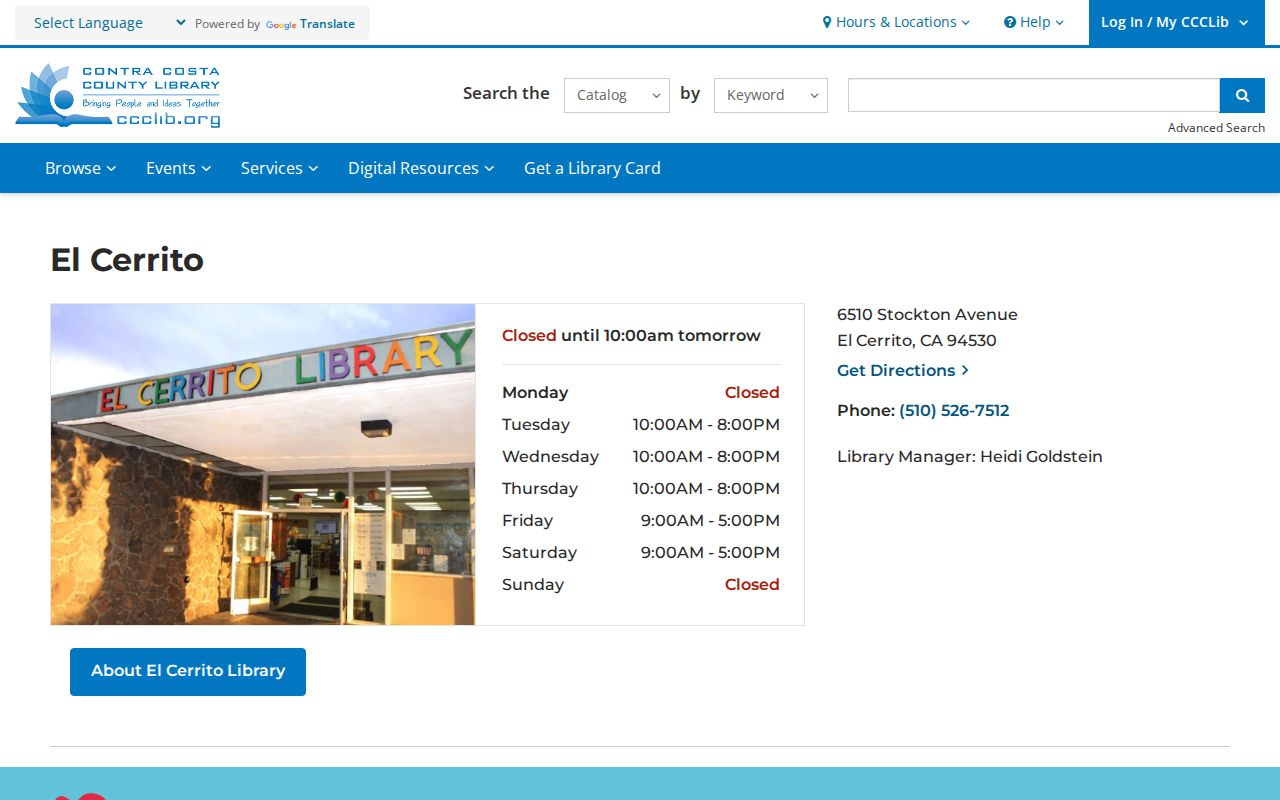
Call or check the current branch information before traveling, because local hours and collection access can change.
When an El Cerrito Entry Disappears
A missing name is a question to test. First look for the title change from El Cerrito Journal to Times-Journal and then The Journal. Next search Richmond, Stege, Berkeley, Albany, or another border label. Check a spouse’s name, a widow notation, a partial surname, and an OCR alternative. Then use an obituary, probate case, deed transfer, census image, or later telephone book to distinguish a move from a death or publication gap.
The same method helps when a household appears at an address but the property record names someone else. Directory occupants and deed owners are different evidence classes. A careful El Cerrito directory trail preserves that distinction and leaves a clear next source for the researcher.