
How El Cerrito Residents Are Found
El Cerrito sits in western Contra Costa County beside Alameda County communities, so the best record depends on what is known at the start. An address usually leads to CCMAP, an APN, the assessor, and then the deed index. A person’s name can lead to RecorderWorks, a court party index, a professional license, or a historical newspaper, but a name alone does not prove identity. A past household needs a directory year, census schedule, obituary, probate file, or deed trail.
The useful workflow is a chain, not one master list. Separate an owner from an occupant, a tax mailing address from a situs address, and an index entry from a document image. Record the source, date, role, APN, case number, or document number as you work. Those small notes make a same-name result easier to test and give the custodian a focused question.
- Start with the known name or complete address, and decide whether the goal is a current clue, a family-history lead, or a past address trail.
- Use CCMAP or the Contra Costa Assessor to connect a physical location to an APN and municipal jurisdiction.
- Use RecorderWorks, the court portal, or an appropriate state record service to test the person, date, and record type.
- Use the El Cerrito Library, historical newspapers, directories, census schedules, and maps when the question reaches into earlier years.
- Ask the custodian for a focused record or file a California Public Records Act request when the needed series is not online.
El Cerrito Records Offices
Most durable person-and-address evidence for El Cerrito is kept at county or state level. The Contra Costa County Clerk-Recorder at 555 Escobar Street in Martinez handles recorded documents, marriage records, fictitious business names, and related index work. The Assessor at 2530 Arnold Drive, Suite 100, provides ownership and assessment assistance. Contra Costa Elections is also at 555 Escobar Street. City Hall remains important for permits, code matters, business licenses, council records, and city requests.
Each office answers a different question. The assessor can help connect a parcel and owner of record. The recorder can show a party’s role in a recorded instrument. Elections services can authenticate a voter’s own registration, while qualified voter-file requests follow narrow California rules. None of those sources is a complete list of every person who lives in a building.
Contra Costa Clerk-Recorder
555 Escobar Street
Martinez, CA
925-335-7900
RecorderWorks recorded documents
Contra Costa Assessor
2530 Arnold Drive, Suite 100
Martinez, CA
925-313-7400
Assessor property information
Contra Costa Elections
555 Escobar Street
Martinez, CA
925-335-7800
California My Voter Status
Martinez is the county seat and the practical counter fallback when an online search stops at an index, a protected field, or a missing image.
El Cerrito Address to APN
An APN is Contra Costa’s ten-digit assessor parcel number, written in the form 123-456-789-0. It is a better join key than a person’s name because the same APN can connect a parcel map, assessment evidence, a tax account, recorded maps, and a deed search. Begin with the physical address in the Contra Costa CCMAP viewer. Select the matching parcel, note the APN and jurisdiction, and keep the situs address separate from any tax mailing address.
The map is geographic, not a people roll. It can show parcel geometry, adjoining shapes, building and lot information, aerials, contours, and configured layer links. The Assessor supplies ownership and assessment assistance, but the county warns that CCMAP does not publish owner names online because of statutory redaction needs. A counter roll inquiry is therefore the reliable owner step when a name is required.
The Contra Costa tax-account lookup also works from the APN or account identifier. Its result can separate the secured bill, installment status, balance, penalties, and payment status. A tax record can support a parcel trail, but it does not establish who occupies the property.
The Assessor’s public information page shows the kind of office support available for a parcel search.
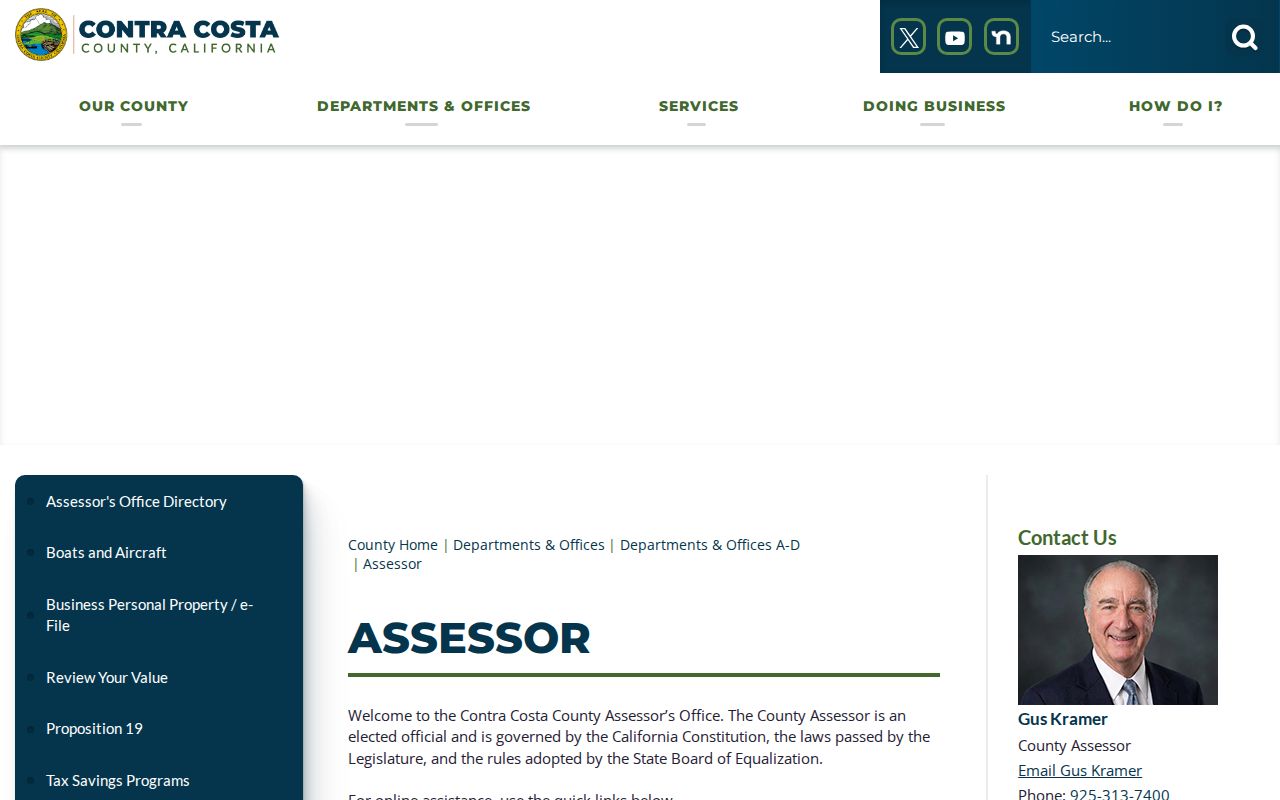
Use the parcel result as a bridge into the county systems, then verify the legal description and assessment year before treating an ownership clue as part of an El Cerrito residents directory search.
- Parcel
- A mapped unit of land identified by an APN and legal description.
- Situs address
- The physical location of the parcel, distinct from where tax notices are mailed.
- Legal description
- The lot, block, tract, or other land wording used to identify the real property.
El Cerrito RecorderWorks Search Fields
The Contra Costa Clerk-Recorder’s RecorderWorks search is organized around parties and instruments, not a friendly street-history report. The modern name index begins January 1, 1986. Deed APN searching begins March 3, 1997, while Old Book mode reaches earlier indexed books through an index-book, fiche-cell, and document sequence. Search a surname with a partial first name when possible. The system accepts a party role or name type, partial-match choice, and a required date range.
Other tabs include document number, document type, map, recording date, book and page for 1986 to 1993, Old Book, legal description, and APN. The document vocabulary includes grant deeds, quitclaims, deeds of trust, reconveyances, liens, releases, easements, covenants, maps, and many administrative records. Record the exact type used. An agreement is not automatically a deed.
| Search field | Name, role or name type, partial match, From date, To date |
|---|---|
| Address bridge | APN search for deeds recorded March 3, 1997 forward |
| Earlier material | Old Book index, fiche cell, and document workflow |
| Result fields | Document number, recording date, document type, party roles, book/page, related-party links |
| Order choices | Regular or certified copy through the official order interface |
A free index view is not the same as a certified copy. For an heir or property question, save the document number, party role, recording date, and legal description before ordering anything.
The RecorderWorks image gives a sense of the fields that join a person to a recorded instrument.
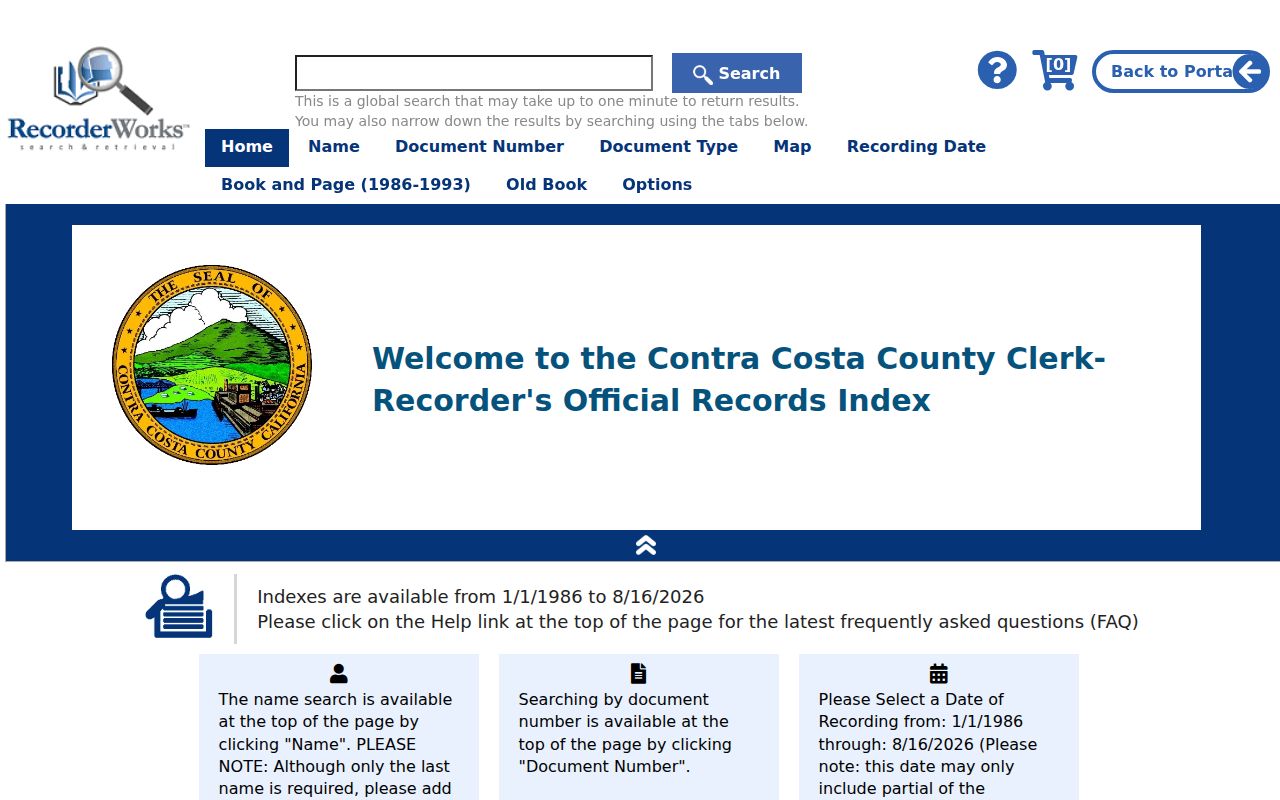
That party-and-document structure is why the El Cerrito residents directory workflow often moves from map to APN, then from APN or owner to the recorder index.
Today’s El Cerrito Resident Sources
Current records answer different parts of the resident question. Property systems are strongest for owners and parcel context. Court, business, license, and newspaper records can confirm a person’s public connection to a place or event. California voter services are intentionally narrower: the public My Voter Status tool authenticates the voter entering protected identifiers, and a voter file is released only for a qualified, documented purpose.
| Source | What It Can Show | Keeper | Access |
|---|---|---|---|
| Assessor and tax records | Owner, APN, assessment, situs and mailing distinction | Contra Costa Assessor and Tax Collector | Map, account lookup, or office help |
| Recorded-document index | Parties, roles, dates, instruments, book/page or document number | Clerk-Recorder | Free index with copy-order options |
| Court index | Case shell, parties, dates, status, hearings, register entries | Contra Costa Superior Court | Public portal, clerk, or order service |
| Business or license index | Public affiliation, agent, entity or license status | California SOS or DCA | Free public search; board limits vary |
| Historical newspaper or directory | Residence clues, social notices, obituaries, names and addresses by year | County library and archives | Library databases, scans, microfilm, or appointment |
When the goal is one person rather than a whole street, the El Cerrito resident lookup workflow adds same-name controls and record-by-record verification. The source’s own fields remain controlling.
El Cerrito Voter Lookup Limits
California’s My Voter Status service is a self-lookup. It asks for first name, last name, birth date, and a driver license or state ID number, or the last four digits of a Social Security number where present. It can return registration status and address, party preference, language preference, polling place, and vote-by-mail or provisional status for the authenticated voter.
That is not permission to browse an El Cerrito street. A separate voter-file request can include name, birth date, registration date, residence and mailing address, precinct, contact information, and party preference, but the requester needs a permitted purpose, documentation, signed certification, and current identification. Driver license and state ID numbers, the last four SSN digits, unique identifiers, and signatures are excluded under Elections Code section 2194.
- Self-lookup
- First name, last name, birth date, license or ID, or last four SSN where present.
- Qualified file
- Requester identity, organization, area, active or inactive choice, history or district option.
- State fee
- $15 per thousand records up to $100; specific record $30 each, capped at $100 and ten records.
- Request route
- Mail to the Secretary of State Elections Division in Sacramento; email and fax are not accepted.
The identity and privacy notice on the state voter-status form is central to understanding what the voter service can and cannot provide.
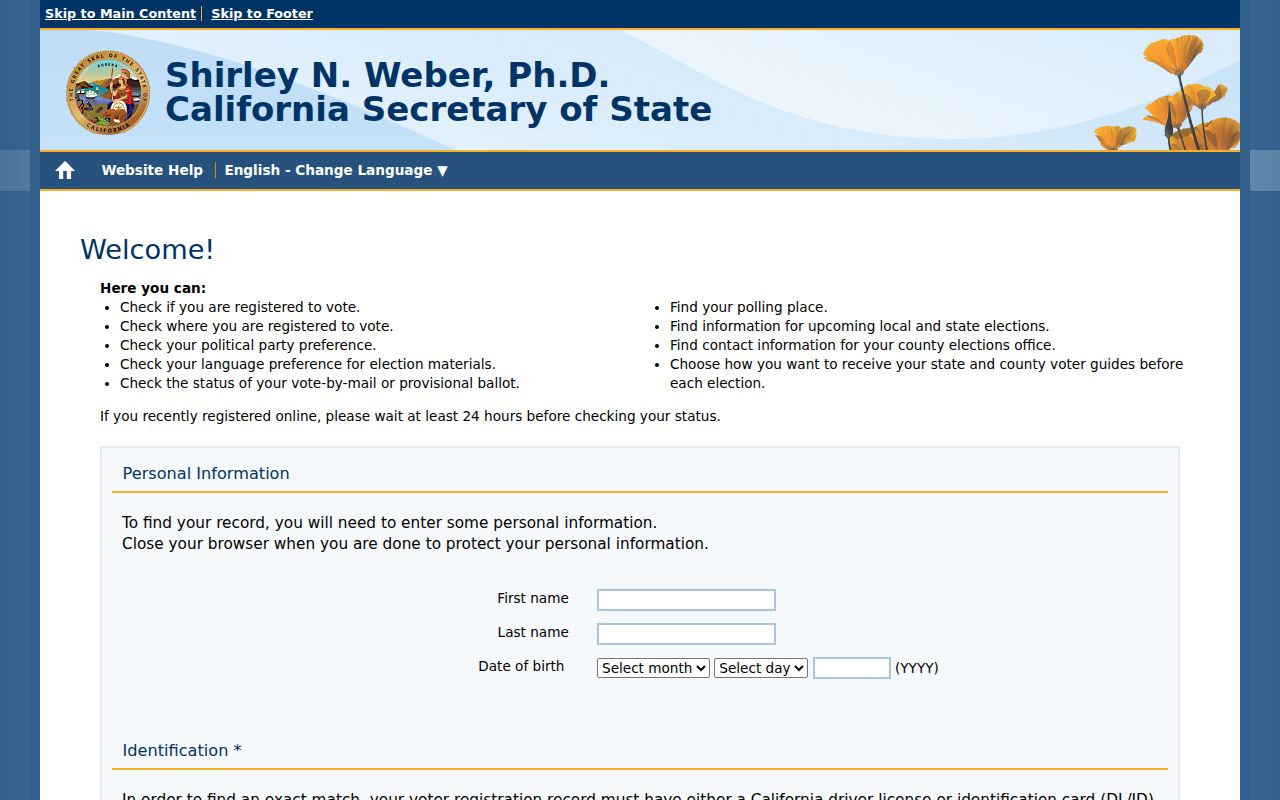
Use the voter service for the voter’s own status or a qualified request, never as a casual neighbor or resident directory.
El Cerrito Court Records Trail
El Cerrito has no separate municipal court. State trial matters go through the Contra Costa Superior Court. Its Online Services portal links to a public case search and electronic record ordering. A name result may show a case number, title, party roles, filing date, case type, status or disposition, hearing data, register-of-actions entries, and document links. A public index is only the first layer.
Traffic searches use a single choice among case number, citation number, or party name in Last, First MI form. Inactive traffic cases older than three years do not display. Civil, small-claims, and probate indexes have their own coverage limits. Some documents are downloadable, while older files, family material, sealed records, and restricted case types may require the clerk or a mail request. Federal matters belong in Northern District of California PACER, not the county portal.
- Case number and title
- Matches the matter, but not identity by itself. Compare party role, dates, and geography.
- Register entry
- Shows filings, events, hearings, or disposition when exposed. Order the needed filing from the clerk.
- Same-name party
- A possible candidate, not proof of the El Cerrito resident. Use two independent identifiers.
The court portal screenshot shows the public-search and record-ordering paths available before a counter visit.
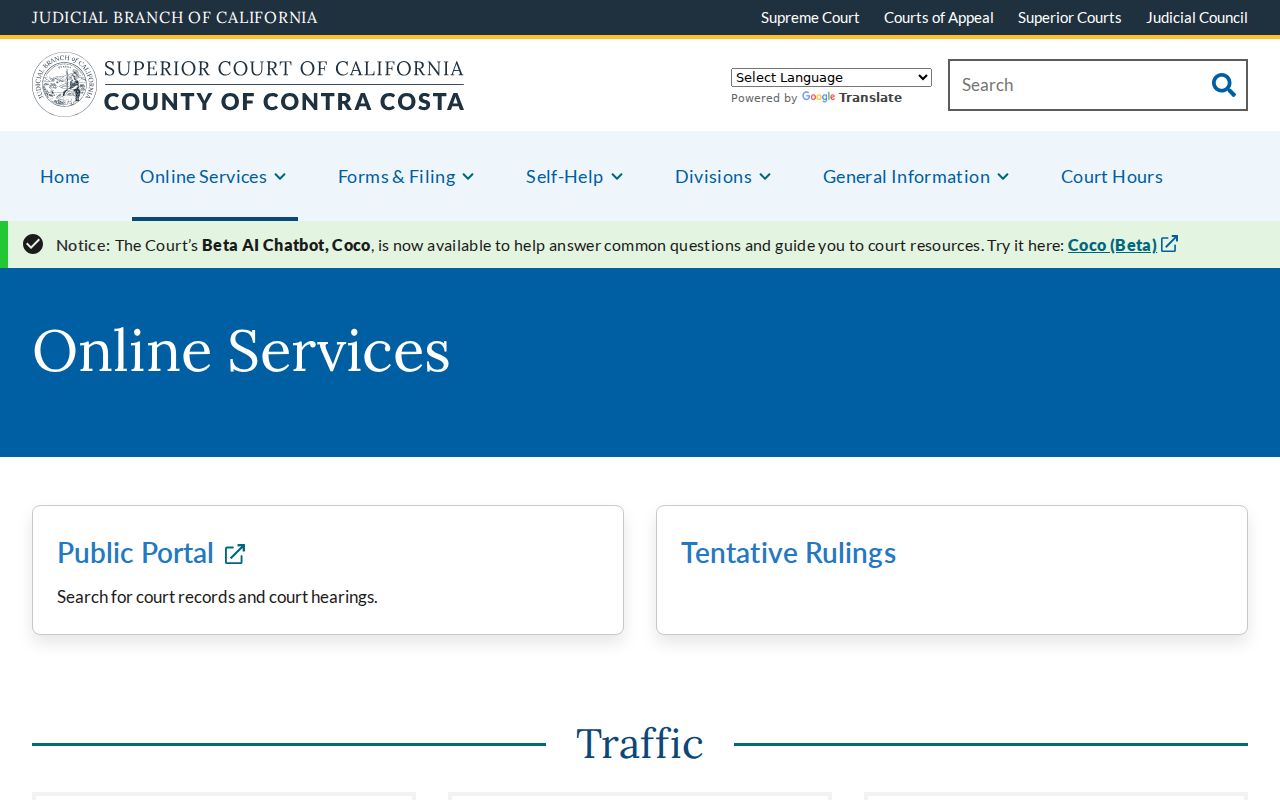
Check the assigned courthouse before traveling. George D. Carroll Courthouse in Richmond is the nearest west-county location, while other case types route to Martinez, Pittsburg, or Walnut Creek.
El Cerrito Vital Record Access
Birth and death events in Contra Costa can be requested through the County Clerk-Recorder or the California Department of Public Health. County marriage certificates come from the office where the license was issued. Divorce decrees are Superior Court records. That custodian split matters because a request sent to the wrong office can add delay without revealing anything about the person.
California separates informational copies from authorized certified copies. An informational birth or death copy can be broadly available but is marked as not valid to establish identity. An authorized copy requires a qualifying relationship under Health and Safety Code section 103526 and a notarized sworn statement for ordinary mail applications. Confidential marriage certificates are restricted to the parties or a court order under Family Code section 509.
- Birth or death
- County Clerk-Recorder or CDPH; informational and authorized copy routes have different relationship rules.
- Public marriage
- Issuing county or CDPH state service; public-license and certified-copy rules apply.
- Confidential marriage
- Issuing county clerk; party request or court order, not an open name search.
- Divorce
- Superior Court case or decree request, subject to court confidentiality and redaction rules.
Historical indexes, newspapers, cemeteries, census schedules, and probate are often the better first step for family history. They can identify the event before a paid certificate request and do not turn a modern certificate into an open resident list.
El Cerrito CPRA Request Route
When a city record is not online, use the El Cerrito City Clerk public-records form. A focused request names the department, record type, and date range. The form asks for contact information, address lines, a preferred contact method, and a description of the records. Inspection is generally free. Copy charges follow the city’s fee schedule, with electronic production preferred where possible. Police records use a separate Records Bureau process.
California’s Public Records Act is now Government Code sections 7920.000 and following. An agency generally determines within ten calendar days whether responsive records exist or are disclosable. Unusual circumstances can add a written extension of up to fourteen days. That is a determination deadline, not a promise that every file will be produced by day ten. Exempt material may be withheld or redacted, and an agency need not create a new resident list or answer a question that no record addresses.
- Name the city department or county custodian most likely to hold the series.
- Describe the record, address or project, and a narrow date range rather than asking for every document about a person.
- Choose inspection, electronic delivery, or copies and ask which charges apply before ordering a large set.
- Keep the request, response, redactions, and any appeal or clarification in the research notes.
For deeds, maps, voter files, court cases, and vital certificates, use the specialized custodian rather than routing every question through City Hall.
El Cerrito Resident Heir Research
An heir trail is strongest when several records point to the same relationship. Start with a probate case or petition, then compare a recorded transfer, obituary, death index, and any directory or newspaper notice. A probate file may identify heirs while a deed or affidavit shows how property moved. An obituary can add a residence or survivor clue, but it may be incomplete or stale.
Use exact names and roles. A grantor is the person transferring an interest; a grantee receives it. A decedent’s name in a case title does not prove that every person with the same surname is related. Note dates, addresses, spouses, middle initials, APNs, and document numbers, and seek a second independent source before treating the connection as established.
| Route | What it offers | What to test |
|---|---|---|
| Official probate or deed | Custodian-held case, transfer, role, date, and legal description | APN, party role, petition, and later order |
| Library or archive source | Obituary, directory, census, and family-history context | Publication date, wording, spelling, and continuity |
| Commercial compilation category | May merge several public or purchased data clues | Provenance, freshness, same-name risk, and source confirmation |
Official records have a custodian, a date, and a defined purpose. A commercial compilation can be a lead at most; return to the county, state, library, or archive source before treating a relationship as established.
El Cerrito Business Record Clues
Business and professional records can corroborate a public connection to El Cerrito without claiming that a business address is a home. California Secretary of State bizfile Online searches an entity name or number and can show status, type, formation jurisdiction, addresses, agent information, and filing history where public. A fictitious business name filing through the County Clerk-Recorder adds a local filing trail.
The Department of Consumer Affairs license search can be narrowed by board, license type, number, name, city, or county when the regulator supports that field. Verify the issuing board, license number, status, issue or expiration date, and any public discipline. City business-license records can be requested from Finance, but the city notes that privacy rules exclude some businesses and that absence from the current search is not proof of no license.
The California business search provides a useful starting point for an entity rather than a resident.
Match an entity or license number before following an address. That keeps an El Cerrito residents directory search from turning a public affiliation into an unsupported residence claim.
Historical El Cerrito Directory Trail
The historical El Cerrito directory trail is regional rather than a single annual city shelf. California Revealed and Richmond Public Library provide non-continuous digitized city directories from 1903 through 1939, with specific years including 1903, 1907 through 1918, 1920, 1921, 1923/24 through 1930, 1932, 1934, 1937, and 1939. Publisher names change from the City of Richmond and Contra Costa County to R.L. Polk and Western Directory Company. Never describe the run as annual.
The 1921 volume explicitly includes Richmond, Pullman, Stege, San Pablo, and El Cerrito. A printed entry can show a surname, initials, occupation abbreviation, employer or industry, residence marker, locality, spouse, widow notation, and sometimes a numbered street address. OCR can break names and hyphenation, so inspect the scan and abbreviation key. The El Cerrito Library’s research resources, Journal holdings, NewsBank local edition, and historical newspaper materials fill gaps between directory years.
For the full collection list and a household-by-household tracing method, use the El Cerrito city directory collections page. A current property clue belongs with the address-oriented street directory instead of being mixed into the historical shelf.
El Cerrito’s 1917 Records Story
El Cerrito incorporated in 1917 at about 1,500 residents. The El Cerrito Journal also begins in 1917, creating parallel civic and newspaper timelines. Earlier residents may appear under county, Richmond-area, Stege, Albany, Berkeley-adjacent, or older post-office labels. A place-name change can therefore look like a missing person when it is really a search-label problem.
That history explains why a careful local search uses more than one label and more than one record type. San Pablo Avenue and hillside neighborhoods contain multiunit parcels and commercial corridors, while border streets can carry a mailing city that does not match legal jurisdiction. The 1926 Sanborn atlas adds a 15-sheet view of buildings and street context, not occupant names.
- 1917: El Cerrito incorporates and the Journal’s local trail begins.
- 1926: First City Hall opens, and the 15-sheet Sanborn atlas covers El Cerrito and nearby labels.
- 1979 to 1984: Search Times-Journal when the El Cerrito Journal title changes.
- 1988 onward: Search The Journal, then the later NewsBank local edition from July 2001.
Privacy Gaps in El Cerrito Rolls
Some missing names are intentional. California’s Safe at Home program gives eligible participants a substitute mailing address and mail forwarding. Voter data has excluded fields and permitted-use rules. DMV personal information is restricted, and utility, delivery, and customer lists are not public resident directories. A record gap may protect a person rather than reflect a poor search.
California privacy law also gives covered consumers rights to know, delete, correct, and opt out of sale or sharing by covered businesses, while public-record exceptions can limit what disappears from a source record. The state’s DROP service can send a deletion request to registered data brokers, but it cannot erase a county deed, a state-held record, or an exempt source. Use the official California privacy route and do not try to defeat an address-confidentiality program.
Lawful personal use. Public records support family history, civic research, property curiosity, and reconnecting with care. Access never authorizes stalking, harassment, unwanted surveillance, threats, or harm. Verify sensitive facts with the custodian and respect protected-address rules.
When an El Cerrito residents directory search reaches a protected or nonpublic field, change the question rather than trying to bypass the safeguard. A documented public record is useful because its limits are visible.